


Small interventions. Significant Impact.
The Quandamn NSPIRE Risk Index™ (QNRI™) is a professional, inspection-agnostic risk governance framework designed to identify systemic and latent building risks between inspection cycles.
Inspections are snapshots in time.
Risk forms continuously.
QNRI™ exists to make that risk visible, defensible, and manageable — without creating regulatory or enforcement exposure.
Why QNRI™ Exists
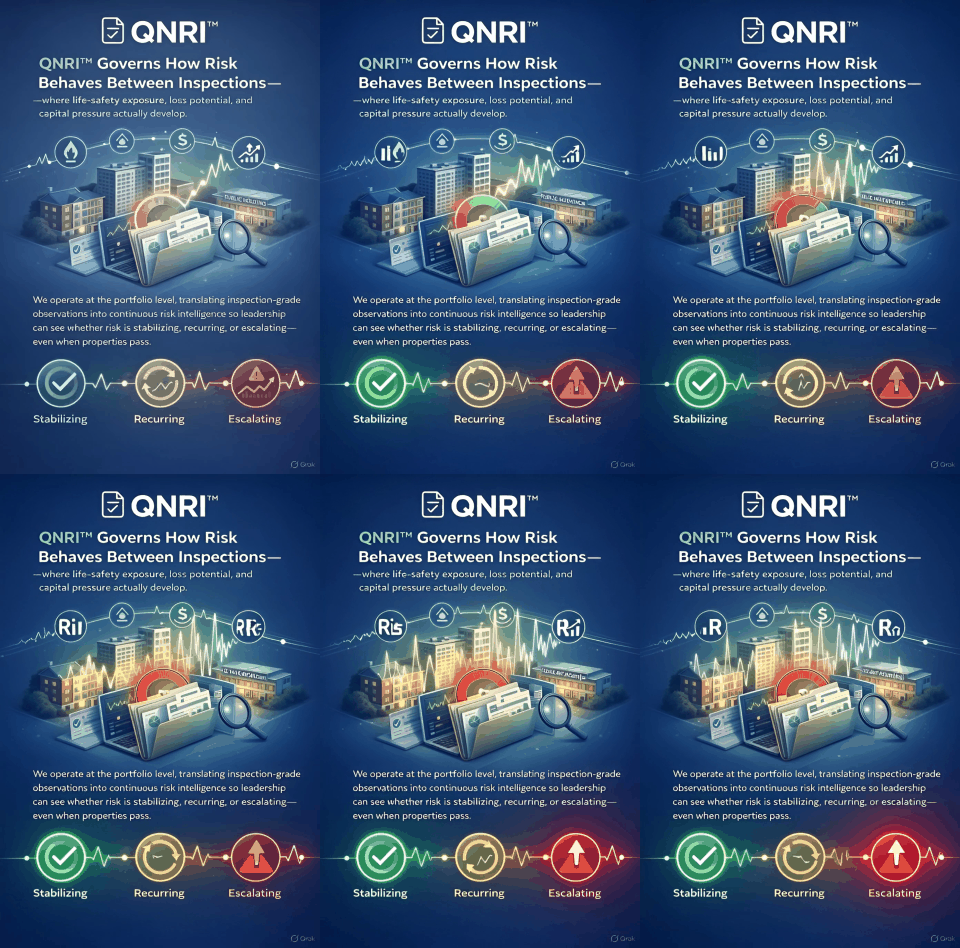
Public housing and multifamily properties often perform well during inspections, then shift focus until the next cycle. Maintenance becomes reactive. Preventive work is delayed. Capital decisions are made under pressure once inspection notice arrives.
The problem is not inspections.
The problem is what happens between them.
QNRI™ addresses that gap.
What QNRI™ Is — and What It Is Not
QNRI™ IS
A structured Risk Index for Systemic Conditions (RISC™ 0–5)
Built on professional judgment — not automated scoring
Focused on building systems, not unit-level snapshots
Designed for ongoing risk governance, maintenance planning, and leadership oversight
Non-regulatory, non-enforcement, and audit-defensible
QNRI™ IS NOT
A code compliance program
A replacement for NSPIRE, REAC, or third-party inspections
A violation report A regulatory submission
QNRI™ supplements inspections — it does not replace them.
The QNRI™ Risk Index (RISC™ 0–5)
The QNRI™ Risk Index (RISC™) provides a normalized view of building risk across critical systems, enabling consistent evaluation, prioritization, and governance between inspections.
Each assessment assigns an independent RISC™ score (0–5) across the following building systems:
Structural
Envelope
Life Safety / Means of Egress (MOE)
Passive Fire Protection
Active Fire Protection
Electrical
Plumbing
Mechanical
Fuel Gas
RISC™ scores are designed to complement—not replace—inspection findings by translating observed conditions into actionable risk signals.
How Scores Are Determined
RISC scores are assigned using structured professional judgment based on:
Severity of observed conditions
Frequency and repetition
Distribution across the building or portfolio
Exposure conditions (environmental and operational)
Consequence of failure (life-safety weighted)
No averaging. Each system stands on its own.
The highest single domain score defines the overall risk posture of the building or portfolio.
Scores trend over time (↑ increasing, → stable, ↓ improving), providing leadership with early warning visibility.
QNRI™ Service Tiers
Tier 1 — Baseline Risk Index
One-time RISC scoring per building or portfolio
Establishes initial risk posture
Ideal for boards, executives, and asset managers seeking clarity
Tier 2 — Semi-Annual Risk Governance
Updated RISC scores twice per year
Trend tracking across all systems
Supports maintenance prioritization and budget planning
Tier 3 — Quarterly Risk Governance
Continuous risk visibility
Early identification of life-safety and systemic exposure
Supports capital planning, leadership reporting, and portfolio oversight
QNRI™ tiers are scalable by property size and portfolio complexity.
Professional Judgment Matters
All assessments are performed by a qualified professional, grounded in:
HUD NSPIRE / REAC inspection experience
Licensed Home Inspector credentials
ICC Residential (R5) and Commercial (B5) inspection certifications
Multi-discipline building systems expertise
Extensive experience inspecting thousands of housing units
The credibility of QNRI™ comes from who assigns the risk — not from automation.
Who QNRI™ Is For
Public Housing Authorities (PHAs)
Multifamily housing portfolios
Boards and executive leadership
Asset management and facilities teams
QNRI™ is designed for decision-makers, not inspectors.
Why Organizations Use QNRI™
See risk before it becomes a life-safety finding
Prioritize maintenance using risk, not inspection timing
Reduce emergency repairs and reactive spending
Maintain defensible, non-regulatory documentation
Strengthen board and leadership oversight
QNRI™ turns inspection data into actionable risk intelligence.
Request a QNRI™ Briefing
If you would like a short, technical briefing on how QNRI™ can supplement your existing inspection framework without replacing it, please contact:
Contact UsLegal Disclaimer
All assessments are advisory in nature and performed under applicable professional licensure and nationally recognized ICC and life-safety standards. Services support—but do not replace—HUD inspections or determinations by the Authority Having Jurisdiction.